
The past few years have accelerated digital transformation across industries, and the cloud has emerged as the bedrock for resilient and scalable operations. This section delves into how Oakville SMBs can harness the power of advanced cloud strategies to not just keep pace, but to lead in their respective markets.
Elevating Oakville SMBs with Forward-Thinking Cloud Strategies in 2026
In 2026, the technological landscape continues to evolve at an unprecedented pace, making strategic cloud adoption a critical imperative for Oakville’s small and mid-sized businesses. Forward-thinking cloud strategies are no longer about simply storing data off-site; they are about building an agile, secure, and efficient operational framework that fosters innovation and sustained growth. For businesses in the Greater Toronto Area (GTA), understanding and implementing these strategies can significantly impact their competitive standing and operational resilience. Embracing cloud solutions allows for greater scalability, enabling businesses to adapt quickly to changing market demands without substantial upfront hardware investments. This flexibility is crucial for SMBs aiming to expand their reach or manage fluctuating workloads effectively. Furthermore, advanced cloud services offer sophisticated tools for data analytics, collaboration, and automation, which are essential for driving productivity and informed decision-making.
The commitment to cloud-based infrastructure in 2026 signifies a proactive approach to business management. It involves a comprehensive understanding of how various cloud services can be integrated to create a synergistic IT ecosystem. This includes not only enhancing existing processes but also paving the way for future technological integrations, such as advanced AI-driven analytics or more sophisticated cybersecurity measures. By adopting a strategic view of cloud adoption, Oakville SMBs can ensure their IT infrastructure is not just a cost center, but a powerful engine for business transformation and a key differentiator in a crowded marketplace. This strategic vision is often best supported by expert guidance, ensuring that the chosen solutions align perfectly with long-term business objectives and security requirements.
The Evolving Cloud Landscape for Oakville Businesses
The cloud computing environment is a rapidly shifting terrain, presenting both opportunities and challenges for Oakville SMBs. Staying abreast of these changes is vital for maintaining a competitive edge and ensuring that IT investments deliver maximum value. The sheer volume of data generated by businesses today, coupled with increasingly complex regulatory environments, necessitates a robust and adaptable infrastructure that only cloud solutions can efficiently provide. Moreover, the interconnectedness of modern business operations means that a single point of failure can have cascading effects, underscoring the need for resilient and distributed cloud architectures. For businesses in the GTA looking to future-proof their operations, understanding these dynamics is the first step towards formulating an effective IT strategy.
The ongoing advancements in cloud technology mean that solutions once considered bleeding-edge are now becoming standard offerings. This includes sophisticated AI and machine learning capabilities integrated into cloud platforms, enabling businesses to gain deeper insights from their data and automate complex tasks. Furthermore, the focus on hybrid and multi-cloud strategies is intensifying, offering businesses greater flexibility and control over where their data resides and how their applications are deployed. This complexity requires careful planning and expert management to ensure optimal performance, security, and cost-efficiency. Businesses that successfully navigate this evolving landscape will be better positioned to innovate, scale, and secure their operations in the years to come.

Why Cloud Adoption is Non-Negotiable for Growth
For Oakville SMBs aiming for sustained growth in 2026, cloud adoption has transitioned from a beneficial option to an essential component of their IT strategy. The core driver is enhanced agility and scalability. Cloud services allow businesses to rapidly adjust their IT resources—whether it’s computing power, storage, or software—to meet fluctuating demands without the significant capital expenditure and lead times associated with on-premises hardware upgrades. This elasticity is critical for SMBs looking to seize new market opportunities or respond to sudden shifts in customer needs. For instance, a retail business experiencing a surge in online orders during a holiday season can instantly scale its e-commerce platform’s capacity in the cloud, ensuring uninterrupted service and customer satisfaction. This ability to scale up or down dynamically directly impacts operational efficiency and cost management, allowing resources to be allocated more effectively. Furthermore, cloud adoption can significantly boost collaboration and productivity by providing seamless access to applications and data from any location, on any device. This is particularly relevant for modern, often dispersed, workforces. Internal teams can leverage cloud-based productivity suites for real-time document co-creation, project management, and communication, fostering a more connected and efficient work environment. This is not just about convenience; it’s about enabling teams to work smarter, faster, and more cohesively. Ultimately, by embracing the cloud, Oakville SMBs can unlock new efficiencies, drive innovation, and build a more resilient foundation for long-term success and competitive advantage.
Key Cloud Trends Shaping SMB IT in the GTA
Several significant cloud trends are reshaping the IT strategies of small and mid-sized businesses across the GTA. One prominent trend is the increasing adoption of Software as a Service (SaaS), particularly integrated platforms like Microsoft 365. These solutions offer a comprehensive suite of tools for productivity, collaboration, and communication, delivered via a subscription model that simplifies IT management and reduces upfront costs. For GTA businesses, this means access to enterprise-grade applications without the burden of complex installations or maintenance. Another critical trend is the focus on enhanced cybersecurity within cloud environments. As businesses migrate more sensitive data and operations to the cloud, the demand for robust security features—including advanced threat detection, data encryption, and identity management—has never been higher. Providers are continually innovating to offer more sophisticated security layers, making cloud environments often more secure than traditional on-premises setups. This trend is directly addressed by comprehensive GTA cybersecurity solutions designed to protect businesses from evolving threats.
Furthermore, hybrid and multi-cloud strategies are gaining traction. Rather than committing to a single cloud provider, many GTA SMBs are adopting a mix-and-match approach, leveraging different cloud services from various vendors to optimize for specific workloads, costs, and compliance requirements. This strategy offers greater flexibility and avoids vendor lock-in, allowing businesses to cherry-pick the best-of-breed solutions for their unique needs. For instance, a business might use one cloud provider for its core business applications, another for disaster recovery, and a third for specialized data analytics. The rise of edge computing, which brings computation and data storage closer to the sources of data generation, is also beginning to influence cloud strategies, particularly for businesses with IoT devices or real-time data processing needs. This trend promises reduced latency and improved performance for time-sensitive applications, further diversifying the cloud service options available to Oakville businesses.
Identifying Your Oakville SMB’s Ideal Cloud Fit
Selecting the right cloud solution is a strategic decision that requires a thorough understanding of your business’s unique circumstances. It’s not a one-size-fits-all scenario; rather, it involves a detailed assessment to ensure that the chosen cloud infrastructure aligns perfectly with your operational needs, future goals, and budgetary constraints. This process begins with a candid evaluation of your current IT environment and a clear articulation of what you aim to achieve through cloud adoption. Without this foundational step, businesses risk investing in solutions that don’t deliver the expected benefits, or worse, create new challenges. For Oakville SMBs, this involves looking beyond generic cloud offerings and pinpointing services that specifically address their sector’s demands and the competitive pressures within the local market. It’s about finding a cloud partner that understands the nuances of your business and can tailor solutions accordingly. This thoughtful approach ensures that your cloud journey is one of strategic advantage, not technological debt.
The landscape of cloud services is diverse, encompassing a wide array of options from basic storage to complex platform services and fully managed applications. Making an informed choice means understanding the distinctions between these offerings and how they map to your business objectives. This is where a consultative approach, often provided by an experienced Managed IT Services Provider (MSP), becomes invaluable. They can help demystify the options, conduct the necessary assessments, and guide you towards a solution that not only meets your immediate needs but also supports your long-term vision for growth and innovation. For example, a business looking to streamline its customer relationship management might find a specific SaaS solution ideal, while a company focused on custom software development might benefit more from Platform as a Service (PaaS). Understanding these differences is key to unlocking the full potential of cloud computing for your Oakville SMB.
Assessing Current Infrastructure and Business Needs
Before embarking on any cloud migration or adoption strategy, a comprehensive assessment of your existing IT infrastructure and core business needs is paramount. This involves a deep dive into your current hardware, software, network capabilities, data storage, and existing applications. Understanding the limitations and strengths of your current setup is crucial for identifying potential migration challenges and opportunities for improvement. For example, assessing your existing network bandwidth might reveal it’s insufficient for a large-scale cloud migration, necessitating an upgrade as part of the overall strategy. Simultaneously, it’s vital to document your business processes and identify key performance indicators (KPIs) that cloud solutions are expected to impact. Are you looking to improve operational efficiency, enhance customer service, reduce IT costs, or strengthen your cybersecurity posture? Clearly defined business needs act as the compass guiding your cloud solution selection. For businesses in the GTA seeking to fortify their defenses, this assessment must include a thorough review of current security protocols and identify any vulnerabilities that cloud solutions can help address. This holistic view ensures that cloud adoption is not just a technological upgrade but a business-driven transformation. It’s also important to consider the user experience; how will the proposed changes affect your employees and their daily workflows? A solution that is technically sound but difficult to use can hinder productivity.
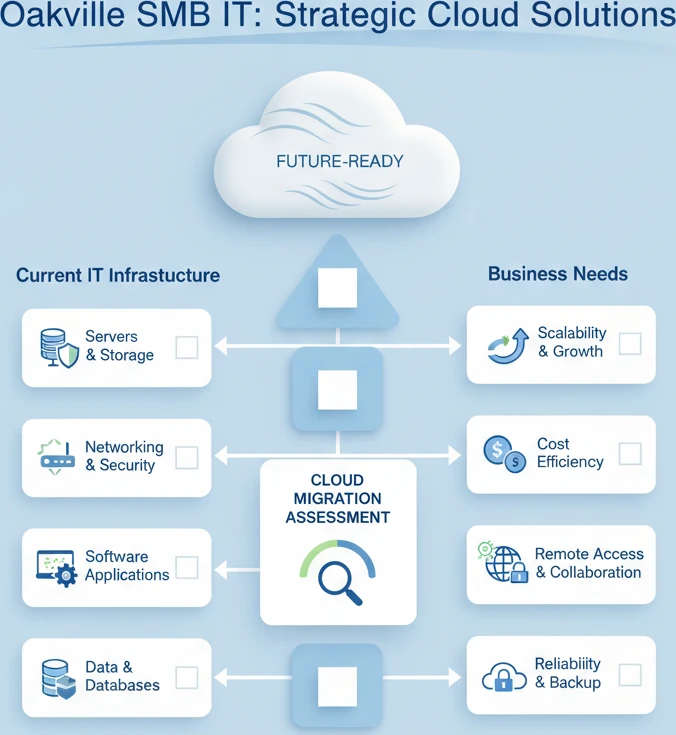
When evaluating your current infrastructure, consider the age and lifecycle of your existing hardware, the licensing models of your software, and the security measures currently in place. For instance, if your servers are nearing end-of-life, migrating to the cloud presents an opportunity to shed the costs and complexities of hardware management. Similarly, understanding your data usage patterns—how much data you store, how frequently it’s accessed, and its criticality—will inform decisions about storage solutions and backup strategies in the cloud. Beyond the technical aspects, a thorough business needs assessment should involve input from various departments. Gathering feedback from sales, operations, finance, and customer service will provide a well-rounded picture of pain points and desired outcomes. This collaborative approach ensures that the chosen cloud solutions will address the diverse requirements of your organization. For businesses focused on robust IT strategy and risk reduction, this phase is non-negotiable, laying the groundwork for effective risk management and IT strategy tailored to your specific context.
Evaluating Different Cloud Service Models (IaaS, PaaS, SaaS)
Understanding the fundamental cloud service models—Infrastructure as a Service (IaaS), Platform as a Service (PaaS), and Software as a Service (SaaS)—is essential for Oakville SMBs to pinpoint the most suitable cloud fit. IaaS provides the foundational IT resources over the internet, including servers, storage, and networking. This model offers the highest level of flexibility and control, akin to having your own data center but without the physical infrastructure. Businesses that require extensive customization or have specific compliance needs often opt for IaaS, as it allows them to manage operating systems, middleware, and applications themselves. Examples include Amazon Web Services (AWS) EC2 or Microsoft Azure Virtual Machines. The trade-off is that it demands more in-house IT expertise to manage and maintain these resources effectively. For SMBs in Oakville, IaaS can be a powerful tool for building custom applications or managing large datasets, but it requires a significant commitment to management.
PaaS offers a step up in managed services, providing a platform for developers to build, run, and manage applications without the complexity of managing the underlying infrastructure. This includes operating systems, middleware, and development tools. PaaS is ideal for businesses that focus on application development and innovation. Examples include Google App Engine or Heroku. PaaS simplifies the development lifecycle, allowing teams to concentrate on coding and feature development rather than infrastructure maintenance, thus accelerating time-to-market for new applications. Finally, SaaS is the most common model, delivering ready-to-use software applications over the internet on a subscription basis. Users access these applications via a web browser or mobile app, and the provider handles all underlying infrastructure, maintenance, and updates. Popular examples include Microsoft 365 for productivity, Salesforce for CRM, and various accounting software solutions. SaaS is often the easiest to implement and manage, making it a popular choice for SMBs looking for off-the-shelf solutions to common business needs, such as enhanced team productivity through Microsoft 365 solutions in the GTA.
Matching Cloud Solutions to Specific Business Objectives
The true power of cloud computing for Oakville SMBs lies in its ability to directly address and enable specific business objectives. When selecting a cloud solution, it’s crucial to align the chosen service model and provider with your overarching goals. For instance, if a primary objective is to improve operational efficiency and reduce manual tasks, a comprehensive SaaS solution like Microsoft 365, with its integrated suite of productivity and collaboration tools, can be highly effective. This not only streamlines workflows but also enhances communication between team members, whether they are in the office or working remotely. For businesses focused on driving innovation and accelerating product development, PaaS solutions offer the ideal environment. By abstracting away infrastructure management, developers can concentrate on coding and deploying new applications or features more rapidly, gaining a competitive advantage. This is particularly relevant for tech-focused SMBs in the dynamic GTA market. Furthermore, if the objective is to enhance data security and ensure regulatory compliance, carefully selected cloud services, potentially utilizing IaaS or specialized SaaS security platforms, can provide robust protection and audit trails. Many cloud providers offer features specifically designed to meet stringent compliance standards, which can be a significant benefit for businesses in regulated industries. For businesses seeking to outsource their IT management and risk reduction, a proactive outsourced IT approach can be the most effective way to achieve these objectives. The key is to view cloud adoption not as a technological upgrade, but as a strategic enabler of tangible business outcomes.
Another common business objective is to achieve cost savings and optimize IT spending. Cloud solutions, particularly SaaS and well-managed PaaS or IaaS, can significantly reduce capital expenditures on hardware and ongoing operational costs related to maintenance, power, and cooling. The pay-as-you-go model allows businesses to scale their IT resources precisely to their needs, avoiding over-provisioning and associated waste. For businesses looking to expand their market reach, cloud infrastructure provides the scalability to support growth without prohibitive upfront investment. Whether it’s handling increased website traffic, managing a growing customer base, or launching new services, the cloud offers the flexibility to scale resources up or down as demand fluctuates. For example, an Oakville-based e-commerce business can effortlessly handle peak holiday season traffic by scaling its cloud-hosted platform. Finally, enhancing business continuity and disaster recovery is a critical objective for many SMBs. Cloud providers offer robust backup and recovery services, often with geographically dispersed data centers, ensuring that businesses can quickly restore operations in the event of an outage, natural disaster, or cyberattack. This resilience is invaluable for maintaining customer trust and minimizing downtime. The focus on secure communication through VoIP systems for Brampton SMBs, for example, can also be a key component of business continuity planning.
Strategic Cloud Migration: A Roadmap for Oakville Businesses
Transitioning to cloud-based solutions represents a significant strategic shift for any Oakville SMB. A well-defined migration roadmap is essential to navigate this process smoothly, minimizing disruption to ongoing operations and ensuring that the expected benefits of cloud adoption are realized. This roadmap is more than just a technical checklist; it’s a comprehensive plan that outlines objectives, assesses risks, defines timelines, and assigns responsibilities. For businesses in the GTA, where competitive pressures are high and operational continuity is paramount, a phased approach is often the most prudent strategy. This involves breaking down the migration into manageable stages, allowing for testing, adaptation, and learning at each step. A successful migration begins with a clear understanding of what data and applications will be moved, in what order, and what the desired outcomes are for each phase. This meticulous planning ensures that the migration serves as a catalyst for operational improvement, rather than a source of IT chaos. By focusing on a strategic, rather than purely tactical, migration, Oakville SMBs can set themselves up for long-term success in the cloud.
The complexities of cloud migration necessitate a disciplined approach. This includes not only the technical aspects of moving data and applications but also the human element of change management. Ensuring that employees are adequately trained and informed about the new cloud environment is critical for adoption and user satisfaction. Furthermore, the ongoing management and optimization of cloud resources post-migration are crucial for realizing the full value proposition. This involves continuous monitoring of performance, security, and costs to ensure that the cloud infrastructure remains aligned with evolving business needs. Engaging with experienced IT partners who specialize in cloud migration can provide invaluable expertise and support throughout this journey, helping Oakville SMBs to navigate the intricacies and achieve their cloud objectives with confidence. The objective is to create a robust, scalable, and secure IT foundation that empowers the business to thrive in the digital age.
Phased Migration Planning for Minimal Disruption
To ensure a smooth transition and minimize disruption to daily operations, a phased approach to cloud migration is highly recommended for Oakville SMBs. This strategy breaks down the complex process into smaller, more manageable steps, allowing for thorough testing and validation at each stage. The initial phase typically involves migrating less critical applications or data. This could include non-essential file storage, development and testing environments, or internal collaboration tools. By starting with lower-risk components, IT teams can gain valuable experience with the migration process, identify potential issues, and refine their procedures without impacting core business functions. This also provides an opportunity to train key personnel on managing cloud resources before tackling more sensitive workloads. For example, migrating a company intranet or an internal knowledge base can serve as an excellent pilot project. The subsequent phases would then involve migrating more critical business applications, such as customer relationship management (CRM) systems or enterprise resource planning (ERP) software, with increasing confidence and established best practices in place.
Each phase of the migration should include rigorous testing and performance monitoring. Before proceeding to the next phase, it’s essential to verify that the migrated applications and data are functioning correctly, securely, and at optimal performance levels. This might involve user acceptance testing (UAT) to ensure that end-users can interact with the migrated systems without issue. Furthermore, detailed planning for rollback procedures in case of unexpected problems is crucial. This ensures that if a migration phase encounters significant difficulties, the business can quickly revert to its previous state with minimal impact. A well-structured plan will also outline communication protocols, ensuring that all stakeholders—from IT staff to end-users—are kept informed about the migration’s progress, any scheduled downtime, and the expected benefits. Implementing a strategy similar to proactive proactive IT support for GTA business operations ensures that potential issues are identified and addressed before they escalate, further contributing to a seamless transition.
Data Security and Compliance Considerations During Transition
During any cloud migration, safeguarding data security and ensuring compliance with relevant regulations are paramount concerns for Oakville SMBs. The transition period can present unique vulnerabilities as data moves between on-premises systems and the cloud. It is imperative to implement robust security measures from the outset. This includes encrypting sensitive data both in transit and at rest. Using secure protocols like TLS/SSL for data transfer and employing strong encryption algorithms for stored data ensures that even if unauthorized access occurs, the information remains unintelligible. Furthermore, understanding the shared responsibility model of cloud security is critical; while cloud providers secure the underlying infrastructure, the business remains responsible for securing its data, applications, and access controls. This involves implementing strong identity and access management (IAM) policies, such as multi-factor authentication (MFA) for all users, and adhering to the principle of least privilege, granting users only the necessary permissions to perform their job functions. For businesses operating in regulated industries, such as healthcare or finance, strict adherence to compliance standards like PIPEDA (Personal Information Protection and Electronic Documents Act) or industry-specific regulations is non-negotiable. This requires careful selection of cloud providers that offer compliance certifications and features that align with these requirements. Engaging with experts in IT compliance and risk management is highly advisable to ensure all regulatory obligations are met throughout the migration and ongoing cloud operations.
It is also crucial to conduct a thorough risk assessment specifically for the migration process itself. This includes identifying potential threats such as data breaches, unauthorized access, or data loss during the transfer. Developing a comprehensive incident response plan tailored to the cloud environment is essential. This plan should outline the steps to be taken in the event of a security incident, including containment, investigation, notification, and recovery. Moreover, understanding the data residency requirements is vital, especially for businesses dealing with international clients or operating under specific jurisdictional laws. Ensuring that data is stored in compliant geographic locations is a key aspect of regulatory adherence. Post-migration, continuous security monitoring and regular audits are necessary to maintain a strong security posture. This proactive approach, coupled with the right security tools and expertise, ensures that Oakville SMBs can migrate to the cloud with confidence, knowing their valuable data is protected and their compliance obligations are met.
Essential Tools and Technologies for a Smooth Move
A successful cloud migration for Oakville SMBs hinges on leveraging the right set of tools and technologies. These resources streamline the process, enhance efficiency, and mitigate potential risks. For data migration, specialized data transfer services and tools are indispensable. Cloud providers often offer proprietary services like AWS Snowball or Azure Data Box for large-scale data transfers, or migration tools that automate the movement of databases and virtual machines. For migrating applications, consider using application migration frameworks and automation scripts. These can help package applications and their dependencies for deployment in the cloud environment, reducing manual configuration and the potential for errors. Tools that automate the provisioning of cloud infrastructure, such as Infrastructure as Code (IaC) solutions like Terraform or AWS CloudFormation, are also critical for ensuring consistency and repeatability in your cloud deployment. These technologies allow you to define your infrastructure in code, making it easier to manage, version, and deploy across different environments. For businesses looking to future-proof their IT infrastructure, exploring tools that support IT infrastructure elevation is a forward-thinking step.
Beyond the core migration tools, several other technologies are vital for a smooth transition. Network assessment and optimization tools are crucial for ensuring adequate bandwidth and low latency for cloud connectivity, which can significantly impact application performance. Monitoring and logging tools are essential for tracking the migration process, identifying bottlenecks, and ensuring that applications are performing as expected post-migration. Cloud providers offer native monitoring solutions, but third-party tools can provide more comprehensive insights. Furthermore, collaboration and project management platforms play a key role in coordinating the migration efforts across different teams. Tools like Asana, Trello, or Microsoft Teams can help manage tasks, track progress, and facilitate communication among migration stakeholders. For Oakville SMBs aiming for seamless team productivity, integrated solutions are often the most effective. Finally, consider leveraging services that offer managed cloud migration support. Partnering with an experienced MSP can provide access to specialized expertise, proven methodologies, and a suite of tools designed to ensure a secure, efficient, and cost-effective cloud transition, much like the comprehensive Mississauga IT support solutions offered by providers focused on proactive management.
Securing Your Oakville Cloud Environment: A Proactive Approach
In today’s interconnected business landscape, robust cloud security is paramount for Oakville SMBs. A proactive security posture doesn’t just mitigate risks; it fosters trust with clients and ensures uninterrupted operations. Neglecting cloud security can lead to costly data breaches, reputational damage, and significant downtime. Implementing comprehensive security measures is no longer an option but a fundamental necessity for any business reliant on digital infrastructure. Understanding the unique threats and vulnerabilities within cloud environments allows for the deployment of tailored defenses, safeguarding sensitive business data and intellectual property from evolving cyber threats.
Zero Trust Architecture in Cloud Deployments
The traditional perimeter-based security model is insufficient for modern cloud environments. A Zero Trust Architecture (ZTA) operates on the principle of “never trust, always verify.” This means every user, device, and application attempting to access cloud resources must be authenticated and authorized, regardless of their location. Implementing ZTA involves micro-segmentation of networks, granular access controls, and continuous validation of identities and device health. For Oakville businesses, this translates to significantly reduced attack surfaces and a more resilient defense against insider threats and sophisticated external attacks. Key components of ZTA include strong identity and access management (IAM), multi-factor authentication (MFA), and least-privilege access policies. Adopting a Zero Trust model is a strategic shift that enhances security posture by assuming breaches are inevitable and focusing on containment.
Cloud-Native Cybersecurity Best Practices
Cloud-native cybersecurity leverages the inherent capabilities of cloud platforms to build more secure applications and infrastructure. This includes utilizing cloud provider’s built-in security tools for identity management, network security, and data protection. Best practices involve implementing infrastructure as code (IaC) with security configurations baked in, employing container security for applications, and ensuring secure API management. For SMBs in Oakville, adopting cloud-native security means aligning with the security frameworks offered by major cloud providers like Microsoft Azure or Amazon Web Services. DevSecOps, integrating security into every stage of the software development lifecycle, is a critical aspect of cloud-native security, ensuring that security is not an afterthought but a foundational element of cloud deployments. Resources like guidance on strategic integration can offer valuable insights for diverse operational needs.
Continuous Monitoring and Threat Detection in the Cloud
A dynamic threat landscape necessitates continuous vigilance. Effective cloud security relies on continuous monitoring and threat detection systems that provide real-time visibility into your cloud environment. This involves collecting logs from various cloud services, applications, and endpoints, and analyzing them for anomalous activities or potential security incidents. Solutions like Security Information and Event Management (SIEM) systems and Cloud Access Security Brokers (CASB) are instrumental in this process. For Oakville businesses, establishing automated alerts and incident response playbooks ensures that potential threats are identified and addressed swiftly, minimizing the impact of any security breach. Proactive threat hunting, where security teams actively search for signs of compromise, complements automated detection, offering a more comprehensive security strategy.
Optimizing Operations with Microsoft 365 Cloud Solutions in Oakville
Microsoft 365 offers a comprehensive suite of cloud-based productivity and collaboration tools that can significantly enhance operational efficiency for Oakville SMBs. Moving to Microsoft 365 allows businesses to access powerful applications from anywhere, on any device, fostering greater flexibility and enabling remote work capabilities. Beyond just email and document editing, the integrated nature of Microsoft 365 provides a cohesive ecosystem designed to streamline business processes, improve team collaboration, and boost overall productivity. The subscription-based model also offers predictable costs, making it an attractive solution for businesses managing their IT budgets. For businesses in the GTA, leveraging Microsoft 365 is a strategic move towards modernization and improved business agility, as highlighted in resources discussing how to boost team productivity.
Leveraging SharePoint and OneDrive for Collaboration
SharePoint Online and OneDrive for Business are cornerstones of Microsoft 365’s collaborative capabilities. OneDrive provides individual cloud storage for users, enabling easy access to files from any device and offering robust version control and sharing options. SharePoint Online extends this by offering a centralized platform for team collaboration, document management, and intranet development. Businesses can create team sites to share project-related documents, manage workflows, and build internal communication hubs. Effective document management through SharePoint reduces versioning conflicts and ensures that all team members are working with the most up-to-date information. For Oakville companies, these tools are essential for enabling seamless collaboration, especially for teams working remotely or across different locations.
Enhancing Communication with Teams and Exchange Online
Microsoft Teams and Exchange Online form the backbone of modern business communication within the Microsoft 365 ecosystem. Exchange Online provides reliable and secure email services, calendars, and contacts, accessible from any device. Microsoft Teams integrates chat, video meetings, calling, and file storage into a single workspace. This unified communication platform drastically reduces the need for multiple disparate communication tools, leading to greater efficiency and improved team cohesion. Oakville businesses can conduct virtual meetings, engage in real-time chat, and share files instantly, all within a secure and managed environment. The integration between Teams and other Microsoft 365 applications ensures that communication is contextually relevant and easily accessible.
Streamlining Workflows with Power Platform Integration
The Microsoft Power Platform—Power BI, Power Apps, Power Automate, and Power Virtual Agents—unlocks advanced workflow automation and custom application development capabilities within Microsoft 365. Power Automate allows Oakville businesses to create automated workflows between their favorite apps and services to synchronize files, get notifications, collect data, and more. Power Apps enables the creation of custom business applications without extensive coding, addressing specific operational needs. By integrating these tools, businesses can automate repetitive tasks, improve data analysis with Power BI, and build custom solutions tailored to their unique requirements, leading to significant gains in efficiency and reduced manual effort. This level of customization and automation drives digital transformation and enhances operational agility.
Cost Management and ROI: Realizing Value from Oakville Cloud Investments
Making informed decisions about cloud adoption and management is crucial for any Oakville SMB to ensure a positive return on investment. Cloud solutions offer immense potential for cost savings and efficiency gains, but without proper management, costs can escalate unexpectedly. Strategic cost management involves not only selecting the right services but also continuously monitoring usage, optimizing resource allocation, and understanding the pricing models of cloud providers. For businesses in Oakville, achieving a clear understanding of their cloud expenditure and its impact on business objectives is key to maximizing value. Focusing on strategic IT investments ensures that technology directly contributes to business growth and profitability, rather than becoming an unmanaged expense.
Strategies for Controlling Cloud Spending
Effective cloud cost management requires a proactive and ongoing approach. Key strategies include rightsizing resources to match actual demand, rather than over-provisioning. This means regularly reviewing compute, storage, and database usage to identify underutilized assets. Implementing automated policies for resource shutdown during non-business hours, where applicable, can also yield significant savings. Utilizing reserved instances or savings plans for predictable workloads can offer substantial discounts compared to on-demand pricing. For Oakville businesses, conducting regular cost audits and leveraging cloud cost management tools provided by cloud vendors or third parties are essential. Cost optimization is an iterative process that requires continuous attention to detail and a commitment to efficiency.
Measuring the Return on Investment of Cloud Solutions
Measuring the return on investment (ROI) of cloud solutions involves quantifying both direct cost savings and indirect benefits. Direct savings might include reduced hardware maintenance, lower energy consumption, and decreased IT staffing needs for infrastructure management. Indirect benefits are often more impactful and can include increased employee productivity, faster time-to-market for new products or services, enhanced scalability, and improved business agility. For Oakville SMBs, establishing clear KPIs before migrating to the cloud, such as reduced downtime, faster data retrieval, or improved collaboration metrics, allows for meaningful measurement of success. A comprehensive ROI analysis should consider tangible and intangible benefits, providing a holistic view of the cloud’s contribution to business value. Consulting on IT strategy can help clarify these metrics and ensure alignment with business goals.
Forecasting Future Cloud Needs and Budgeting
Accurate forecasting of future cloud needs is vital for effective budgeting and resource planning. This involves analyzing current usage trends, anticipating business growth, and understanding upcoming project requirements. Factors like increased customer demand, expansion into new markets, or the adoption of new technologies will influence future cloud resource consumption. For Oakville businesses, working with an IT partner can provide valuable insights into emerging cloud trends and help in developing realistic forecasts. Proactive budgeting ensures that sufficient funds are allocated for cloud services, preventing unexpected cost overruns and ensuring that the business can scale its operations seamlessly as it grows. Regular reviews of the cloud strategy and budget are essential to adapt to evolving business needs.
Disaster Recovery and Business Continuity in the Oakville Cloud
For any business, ensuring continuity of operations in the face of unforeseen events is paramount. Cloud-based disaster recovery (DR) and business continuity (BC) solutions offer Oakville SMBs a resilient and cost-effective way to protect their data and maintain operations. Unlike traditional on-premises DR solutions, cloud DR leverages the vast infrastructure and advanced capabilities of cloud providers, offering scalability, flexibility, and faster recovery times. Implementing a robust DR/BC plan is not just about recovering from a disaster; it’s about minimizing downtime, protecting critical data, and ensuring that the business can continue to serve its customers without significant disruption. This proactive approach builds resilience and provides peace of mind.
Designing Resilient Cloud-Based Backup Solutions
Designing effective cloud-based backup solutions requires a strategic approach that goes beyond simply copying files. Key considerations include the frequency of backups, the retention period for data, and the geographical distribution of backup storage to ensure data availability even in the event of a regional outage. Solutions like automated cloud backups for servers, workstations, and critical applications ensure that data is consistently protected. For Oakville businesses, choosing a backup solution that offers granular recovery options allows for the restoration of specific files or entire systems, minimizing data loss and recovery time. Data encryption both in transit and at rest is also a critical component of a secure backup strategy, safeguarding sensitive information.
Implementing Cloud DR Strategies for Rapid Recovery
Cloud Disaster Recovery (DR) strategies focus on minimizing recovery time objectives (RTO) and recovery point objectives (RPO). RTO is the maximum acceptable downtime after an incident, while RPO is the maximum acceptable amount of data loss measured in time. Cloud DR solutions often involve replicating critical data and applications to a secondary cloud region or utilizing cloud provider’s DR services. For Oakville companies, implementing strategies like pilot light or warm standby can enable rapid failover to a secondary environment. This ensures that critical business functions can resume quickly after a disruption. Automated failover mechanisms and tested recovery procedures are crucial for achieving the rapid recovery times necessary to maintain business operations. Exploring options for risk reduction is a key benefit of such strategies.
Testing and Validating Cloud DR Plans
A disaster recovery plan is only as effective as its last successful test. Regular testing and validation are critical to ensure that the cloud DR strategy will function as expected when needed. Testing involves simulating various disaster scenarios to verify data recovery, application functionality, and network connectivity in the recovery environment. For Oakville businesses, conducting these tests at least annually, and ideally more frequently, helps identify any gaps or weaknesses in the plan. Documenting test results and updating the DR plan based on findings is essential. Validating the DR plan not only confirms its efficacy but also ensures that IT staff are familiar with the recovery procedures, leading to a more confident and swift response during a real emergency. Compliance requirements often mandate regular DR testing, making this an essential practice.
Managed Cloud Services: Your Strategic IT Partner in Oakville
For Oakville small to medium-sized businesses (SMBs), navigating the complexities of cloud computing can be a significant challenge. Engaging with a managed cloud services provider (MSP) transforms this challenge into a strategic advantage. An MSP acts as an extension of your IT department, offering specialized expertise to manage, maintain, and optimize your cloud infrastructure. This partnership allows your internal team to focus on core business objectives rather than day-to-day IT operations. By leveraging the specialized skills and advanced tools of an MSP, businesses can ensure their cloud environments are secure, efficient, and aligned with their growth strategies. This proactive approach not only reduces operational overhead but also enhances overall business resilience and agility in a competitive market.
The decision to outsource cloud management hinges on a few critical factors. Firstly, consider the level of expertise required. Does your internal team possess the deep knowledge of specific cloud platforms (like Azure, AWS, or Google Cloud), cybersecurity best practices, and disaster recovery protocols necessary for robust cloud operations? Secondly, evaluate the cost-effectiveness. While in-house IT can be expensive, factoring in salaries, training, and the constant need for updated tools, outsourcing often presents a more predictable and potentially lower total cost of ownership. Finally, assess the scalability and flexibility needs of your business. An MSP can rapidly scale resources up or down to meet fluctuating demands, a feat often difficult and costly for internal teams to achieve.
The Benefits of Outsourcing Cloud Management
Outsourcing cloud management to a reputable MSP offers a multitude of benefits tailored for SMBs. Foremost among these is enhanced security. MSPs employ dedicated cybersecurity professionals who stay abreast of the latest threats and implement advanced security measures, often exceeding the capabilities of an internal IT team. This includes proactive threat detection, regular vulnerability assessments, and robust incident response plans. Furthermore, outsourcing provides access to 24/7 monitoring and support. Cloud infrastructure requires constant vigilance; an MSP ensures that your systems are monitored around the clock, with immediate alerts and swift resolutions for any issues that arise, minimizing downtime. This continuous oversight is crucial for maintaining operational continuity. Another significant advantage is cost optimization. MSPs leverage economies of scale and specialized tools to manage cloud resources efficiently, reducing waste and ensuring you only pay for what you need. They can also advise on the most cost-effective cloud solutions for your specific workloads, preventing overspending on underutilized services. This strategic financial management frees up capital for other business investments.
Moreover, outsourcing delivers improved reliability and performance. MSPs utilize best practices for cloud architecture, performance tuning, and load balancing to ensure your applications and services run smoothly and consistently. They proactively identify and address potential bottlenecks before they impact users. This leads to a better end-user experience and increased employee productivity. The access to specialized expertise is another key benefit. Cloud technologies evolve rapidly, and keeping an internal team up-to-date with every advancement is challenging. MSPs invest heavily in training and certification for their staff, providing your business with access to a broad spectrum of cloud competencies without the direct cost of hiring and retaining such talent. This ensures you are always leveraging the most effective and modern cloud solutions available for your business needs.
What to Look for in an Oakville Cloud MSP
When selecting a cloud MSP in Oakville, several key criteria should guide your decision. Firstly, prioritize providers with a demonstrated understanding of SMB needs and local market conditions. An MSP familiar with the Oakville business landscape can offer more tailored solutions and support. Look for certifications and accreditations that validate their technical expertise and adherence to industry standards, such as Microsoft Gold Partner status or relevant AWS certifications. Secondly, assess their service level agreements (SLAs) carefully. A strong SLA should clearly define response times, resolution times, uptime guarantees, and penalties for non-compliance. Understand what services are covered and the exact metrics used to measure performance. This provides a clear framework for accountability and expected service delivery.
Thirdly, evaluate their proactive management and monitoring capabilities. A good MSP doesn’t just react to problems; they prevent them. Inquire about their monitoring tools, alerting systems, and the methodologies they employ for continuous infrastructure health checks. Ask for details on their disaster recovery and business continuity planning processes. Can they demonstrate a robust plan to get your business back online quickly after an unforeseen event? Consider their clientele and testimonials. Request references from businesses similar in size and industry to yours. Speaking with existing clients can provide invaluable insight into the MSP’s reliability, responsiveness, and overall effectiveness. Finally, examine their communication and reporting structure. How will they keep you informed about your cloud environment’s performance, security status, and any planned maintenance or upgrades? Clear, regular, and transparent communication is vital for a successful partnership.
Proactive Monitoring and Optimization for Cloud Infrastructure
Proactive monitoring is the cornerstone of effective cloud infrastructure management. It involves using sophisticated tools and strategies to constantly observe the health, performance, and security of your cloud resources. This includes tracking key performance indicators (KPIs) such as CPU utilization, memory usage, network traffic, and application response times. By identifying trends and anomalies in real-time, an MSP can detect potential issues before they escalate into critical problems, preventing costly downtime and performance degradation. For example, a sudden spike in server load might indicate an impending application failure or a denial-of-service attack, allowing for immediate intervention. This preventative approach is far more cost-effective than reactive troubleshooting.
Optimization goes hand-in-hand with monitoring. Once performance baselines are established, an MSP can implement strategies to fine-tune your cloud environment for maximum efficiency and cost savings. This can involve right-sizing virtual machines to match actual workload demands, identifying and eliminating underutilized resources, and optimizing storage configurations. Cloud environments also offer opportunities for automated scaling, where resources are dynamically adjusted based on traffic patterns. An experienced MSP can configure these auto-scaling rules precisely to ensure optimal performance during peak periods while minimizing costs during quieter times. This continuous process of monitoring and optimization ensures your cloud infrastructure remains aligned with your business needs and budget, maximizing return on investment. For businesses aiming for long-term IT success, understanding these proactive measures is essential, much like a strategic approach to managing IT risks for growth.
Future-Proofing Your Oakville Business with Scalable Cloud Infrastructure
In today’s rapidly evolving business landscape, scalability is not just a desirable feature; it’s a necessity for survival and growth. Cloud infrastructure offers inherent scalability, allowing businesses to easily adjust their IT resources – such as storage, computing power, and bandwidth – to meet fluctuating demands. For Oakville SMBs, this means they can rapidly expand operations during peak seasons or successful product launches without the significant capital expenditure and long lead times associated with traditional on-premises hardware upgrades. Conversely, during slower periods, resources can be scaled down, preventing unnecessary costs. This agile approach ensures that your IT infrastructure always matches your current business needs, fostering efficiency and responsiveness.
Beyond simply scaling up or down, future-proofing involves building a cloud strategy that is resilient and adaptable to emerging technologies and changing market dynamics. This includes adopting a multi-cloud or hybrid cloud strategy where appropriate, to avoid vendor lock-in and leverage the best services from different providers. Furthermore, embracing containerization technologies like Docker and orchestration platforms like Kubernetes can enhance application portability and deployment speed, making your systems more flexible and easier to update. A well-architected cloud infrastructure, managed by experts, also provides a robust foundation for adopting advanced technologies such as artificial intelligence (AI), machine learning (ML), and the Internet of Things (IoT), enabling your Oakville business to remain competitive and innovative in the long term. Consider how robust IT strategy can pave the way for such advancements, as discussed in resources on future-proofing your business.
When building a scalable cloud strategy, it’s crucial to consider potential pitfalls. One common mistake is over-provisioning resources with the assumption that “more is always better.” This leads to unnecessary cloud spend. Conversely, under-provisioning can cripple performance and lead to frustrated customers. Another pitfall is neglecting security as scalability increases; more resources can mean a larger attack surface if not managed diligently. It’s also vital to ensure that your applications are designed with scalability in mind from the outset. Legacy applications may not perform well or be manageable in dynamic cloud environments. A strategic partnership with an MSP can help avoid these issues by providing expert guidance on architecture, resource management, and security best practices tailored to your business’s unique trajectory.
For comprehensive IT management and strategic guidance in the Greater Toronto Area, including Oakville, organizations can find valuable support from providers like AYS Technologies Canada Inc. Their expertise in managed IT services and cloud solutions is designed to enhance business operations and security.