

In today’s fast-paced business environment, staying connected is more than just a convenience; it’s a cornerstone of operational efficiency and growth. For businesses in Georgetown, embracing advanced communication tools is no longer optional but a strategic imperative.
This guide explores how modern Voice over Internet Protocol (VoIP) systems can revolutionize how Georgetown companies connect, collaborate, and serve their customers, ensuring they remain competitive and agile in a dynamic marketplace.
Transforming Georgetown Businesses with Advanced Communication Tools
The business landscape is constantly shifting, driven by technological advancements and evolving customer expectations. In Georgetown, companies are recognizing that their communication infrastructure is a direct reflection of their modernity and their capacity to adapt. Traditional phone systems, while familiar, often fall short in providing the integrated, flexible, and cost-effective solutions required by today’s dynamic organizations. The move towards digital-first strategies means that how businesses communicate internally and externally has become a critical factor in their overall success and competitive edge.
Modern communication is the lifeblood of business growth, especially in a thriving community like Georgetown. Businesses that invest in advanced communication tools unlock significant advantages, including enhanced productivity, improved customer engagement, and greater operational flexibility. The ability to seamlessly integrate various communication channels—voice, video, messaging—allows teams to collaborate more effectively, regardless of their physical location. This agility is crucial for adapting to market changes and seizing new opportunities. Embracing these tools means not just keeping pace, but actively shaping a more efficient and responsive business model.
Understanding VoIP: The Foundation of Streamlined Business Communications
Voice over Internet Protocol (VoIP) systems represent a fundamental shift from the analog telephony that has dominated business communication for decades. Unlike traditional phone lines that rely on physical copper wires and circuit-switched networks, VoIP transmits voice data as digital packets over the internet. This fundamental difference allows for a host of advanced features, cost efficiencies, and integration possibilities that traditional systems simply cannot match. For businesses in Georgetown, understanding this distinction is the first step towards leveraging a more powerful and flexible communication solution that can significantly enhance their operational capabilities.
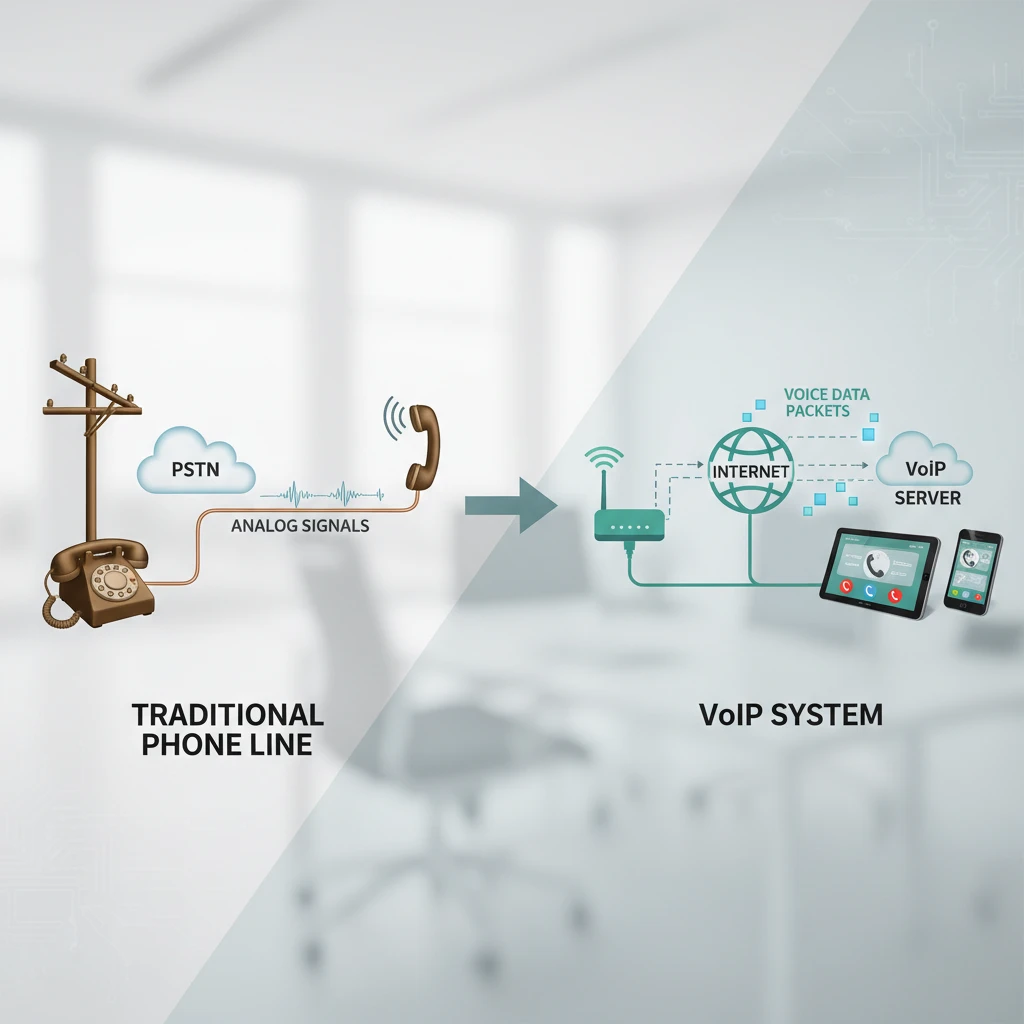
The key benefits of adopting a Voice over Internet Protocol system are multifaceted and directly impact a business’s bottom line and operational agility. Significant cost savings are often the initial draw, as VoIP typically reduces monthly phone bills and eliminates the need for expensive hardware maintenance associated with traditional PBX systems. Beyond cost, there’s a marked improvement in scalability and flexibility, allowing businesses to easily add or remove lines as their needs change without complex installations. Furthermore, VoIP systems offer a wealth of advanced features, such as unified communications, video conferencing, and sophisticated call routing, which enhance collaboration and customer service. This makes them an ideal solution for businesses seeking to modernize their communication infrastructure.
Key Features of Modern VoIP Systems for Georgetown Businesses
Modern VoIP systems offer a suite of integrated functionalities designed to enhance collaboration and streamline workflows. Unified Communications (UC) is a cornerstone, bringing together voice calls, video conferencing, instant messaging, and presence information into a single, cohesive platform. This integration eliminates the need to switch between multiple applications, leading to more efficient communication and faster decision-making for your team. For example, a sales representative can seamlessly transition from a chat to a video call with a client or colleague without leaving their primary communication interface, fostering a more connected and productive work environment. Many systems also offer integrations with other business software, further enhancing productivity.
Advanced call management capabilities are another critical aspect of modern VoIP solutions. Features such as intelligent call routing ensure that incoming calls are directed to the most appropriate person or department, minimizing wait times and improving customer satisfaction. Auto-attendants (IVR systems) provide professional greetings and menu options, guiding callers efficiently. Furthermore, the convenience of voicemail-to-email transcription and delivery means that missed messages can be reviewed and responded to promptly, even when away from the desk. This level of control and efficiency transforms how calls are handled, projecting a more professional image for your Georgetown business.
The inherent scalability and flexibility of VoIP systems are paramount for businesses experiencing growth or seasonal fluctuations. Unlike traditional phone lines that require physical installations and significant lead times, adding or removing users and lines in a VoIP system can often be done with a few clicks through a web-based portal. This adaptability means that your communication infrastructure can grow alongside your business without incurring substantial upfront costs or disruptions. Whether you’re opening a new branch office or scaling down during a slow period, a VoIP system can easily adjust to meet your evolving operational demands, providing a truly agile communication solution.
The Strategic Advantages of VoIP for Small to Mid-Sized Enterprises in Georgetown
For small to mid-sized enterprises (SMEs) in Georgetown, the adoption of VoIP technology presents compelling strategic advantages, chief among them being significant cost savings. By leveraging existing internet connections, businesses can dramatically reduce or even eliminate expenses associated with traditional landlines, such as line rental fees, long-distance charges, and the maintenance of complex on-premises hardware. This reduction in telecommunications expenditure frees up valuable capital that can be reinvested into other critical areas of the business, such as marketing, product development, or staff training. For example, a Georgetown-based firm might see its monthly phone bill cut by 30-50% after migrating to a VoIP system, representing a tangible and ongoing financial benefit.
VoIP systems are instrumental in fostering enhanced collaboration, particularly for businesses that embrace remote or hybrid work models. Features like seamless video conferencing, instant messaging, and presence indication allow team members to connect and communicate in real-time, regardless of their geographical location. This capability is crucial for maintaining team cohesion and productivity when employees are not physically co-located. Consider a Georgetown business with a mix of in-office and remote staff; VoIP ensures that everyone has access to the same communication tools, facilitating spontaneous discussions and efficient project management, much like if they were all in the same room. This fosters a more integrated and productive workforce.
Implementing a VoIP system also leads to improved customer service, a critical differentiator in any competitive market. The advanced call management features, such as intelligent routing and auto-attendants, ensure that customer inquiries are handled promptly and efficiently, reducing wait times and frustration. Furthermore, features like call recording and detailed analytics provide valuable insights into customer interactions, allowing businesses to identify areas for improvement and enhance service quality. A professional greeting and a smooth, efficient call experience contribute significantly to a positive brand perception. For example, a local retail business can use VoIP to ensure all customer queries are answered quickly, leading to higher customer satisfaction and repeat business.
Essential Considerations When Choosing a VoIP Provider in Georgetown
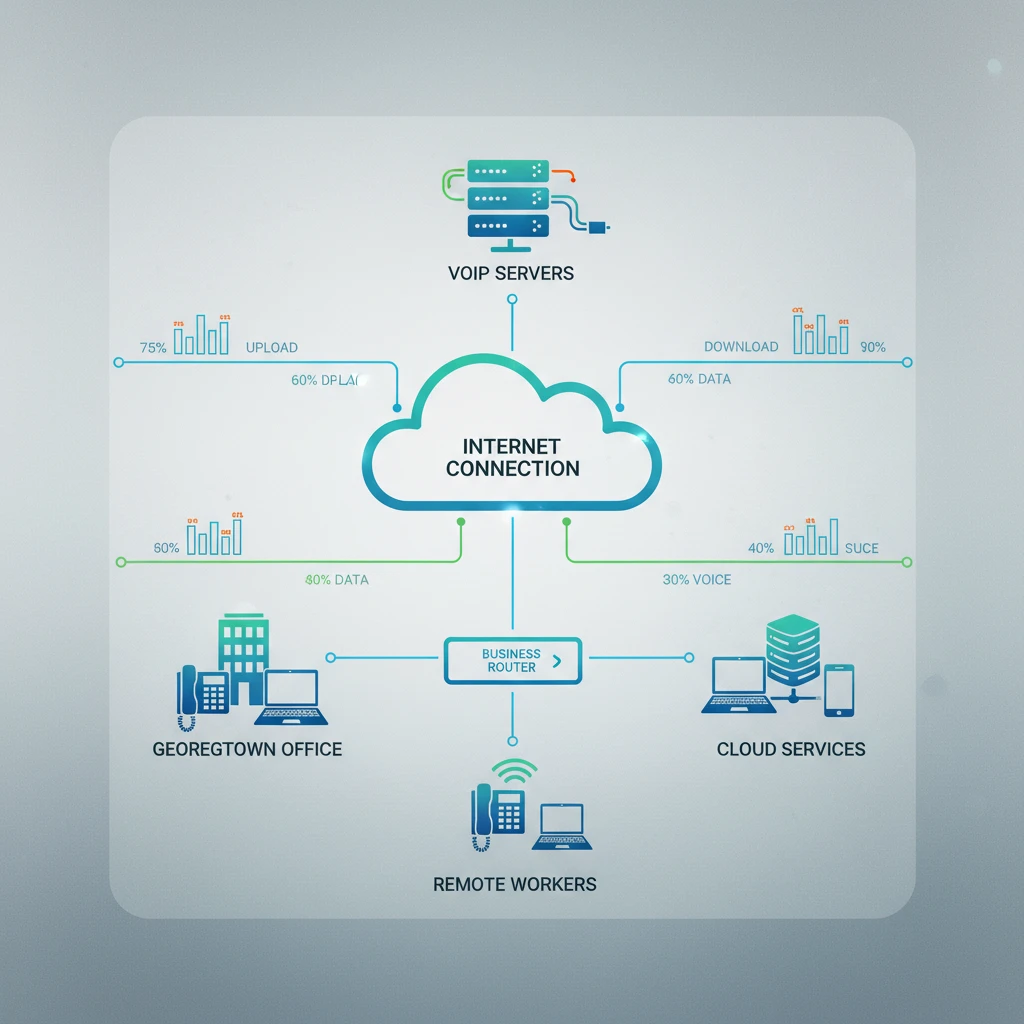
Selecting the right Voice over Internet Protocol (VoIP) provider for your Georgetown business involves a meticulous evaluation process. It’s not merely about finding the cheapest option, but about identifying a partner that aligns with your operational needs and future growth. A critical first step is to **assess your current infrastructure and bandwidth**. Old network hardware or insufficient internet speeds can significantly hinder VoIP performance, leading to dropped calls and poor audio quality. Understanding your peak usage times and the number of concurrent calls you anticipate is crucial for determining the required bandwidth. For instance, a small retail store with infrequent inter-office calls will have different needs than a busy call center. A thorough network assessment can prevent costly post-implementation issues and ensure a smooth transition.
Beyond infrastructure, the feature sets and customization options offered by a provider are paramount. While basic calling is standard, advanced features can dramatically enhance productivity. Consider unified communications capabilities like instant messaging, video conferencing, and presence indicators, which foster better internal collaboration. For sales teams, integration with Customer Relationship Management (CRM) software is invaluable, allowing for click-to-dial functionality and automatic call logging. A good provider will offer flexibility, allowing you to tailor the system to your specific workflows, whether it’s advanced call routing for a professional services firm or dedicated support lines for a healthcare practice. Don’t overlook the importance of scalability; your chosen system should grow with your business.
Equally vital is a clear understanding of the support levels and service level agreements (SLAs). Downtime for communication systems can be incredibly costly. Investigate what kind of technical support is offered: Is it 24/7? What are the response times for critical issues? A robust SLA should clearly define uptime guarantees, disaster recovery protocols, and procedures for service disruptions. For businesses in Georgetown that rely heavily on constant client interaction, such as law offices or financial advisors, a provider with a proven track record of reliability and rapid issue resolution is non-negotiable. Reviewing client testimonials and case studies can offer insight into a provider’s real-world support performance. An example of a strong SLA might guarantee 99.99% uptime and a response time of under 15 minutes for critical hardware failures.
Implementing a Secure VoIP Solution: Protecting Your Georgetown Business
The migration to VoIP systems, while offering numerous benefits, also introduces new cybersecurity considerations. The importance of cybersecurity in VoIP cannot be overstated. Unlike traditional phone lines, VoIP systems transmit voice data over the internet, making them susceptible to common cyber threats such as denial-of-service (DoS) attacks, eavesdropping, and unauthorized access. A compromised VoIP system can lead to significant business disruption, financial losses, and reputational damage. For businesses in Georgetown, particularly those handling sensitive client information, robust security measures are not an option but a necessity. Proactive defense mechanisms are essential to safeguard communication channels.
Implementing effective strategies for ensuring data privacy and call security is a multi-layered approach. This includes employing strong encryption protocols, such as Transport Layer Security (TLS) for signaling and Secure Real-time Transport Protocol (SRTP) for media streams, to protect data in transit. Network security measures like firewalls, Intrusion Detection/Prevention Systems (IDPS), and virtual private networks (VPNs) are crucial for segmenting and protecting your VoIP traffic. Regular security audits and vulnerability assessments should be conducted to identify and address potential weaknesses. Educating employees about phishing attempts and secure password practices further strengthens your defenses against social engineering tactics targeting your communication platform.
When selecting a VoIP provider, it is essential to prioritize those who demonstrate a security-first approach. Look for providers that are transparent about their security practices, certifications (such as ISO 27001), and compliance with relevant data protection regulations. A reputable provider will proactively implement security patches, monitor for threats, and offer advanced security features like fraud detection and toll-fraud prevention. Partnering with a provider like AYS Technologies, which offers comprehensive cybersecurity solutions, ensures that your VoIP system is integrated into a broader security strategy. This holistic approach minimizes risk and provides peace of mind for your Georgetown business operations.
Seamless Migration: Transitioning to VoIP in Georgetown with Ease
A successful transition to a VoIP system in Georgetown hinges on meticulous planning and execution. Developing a realistic VoIP implementation timeline is the cornerstone of this process. This timeline should account for all stages, from initial assessment and provider selection to system configuration, testing, and final rollout. Factor in potential delays, such as hardware delivery or complex network configurations. Breaking down the project into manageable phases allows for better oversight and reduces the risk of overlooking critical steps. A phased rollout, perhaps starting with one department, can also provide valuable lessons learned before a full-scale deployment. This strategic approach ensures that the migration is as smooth and non-disruptive as possible for your Georgetown business.
Effective user training and adoption strategies are crucial for maximizing the benefits of your new VoIP system. Employees need to understand not only how to use the basic calling features but also how to leverage advanced functionalities that can improve efficiency. Comprehensive training sessions, user guides, and ongoing support are essential. Consider creating a champion within your team who can act as a point person for questions and provide peer-to-peer support. Addressing user concerns proactively and highlighting the advantages of the new system, such as improved collaboration tools and mobility options, can foster higher adoption rates. For example, demonstrating how to use call forwarding or instant messaging effectively can quickly showcase the system’s value.
Maintaining business continuity during the transition is paramount. Minimize disruption by scheduling major cutovers during off-peak hours or weekends. Have a clear rollback plan in place in case unforeseen issues arise. Ensure that critical contact information and call routing rules are accurately transferred. Furthermore, communicate the transition plan clearly and frequently to all stakeholders, including employees and key clients, to manage expectations. For businesses in Georgetown, exploring hybrid solutions during the transition period, where both old and new systems operate concurrently for a short time, can provide an extra layer of security and ensure that no calls are missed. This careful management prevents the transition from negatively impacting your daily operations.
Beyond Voice: Maximizing VoIP for Operational Efficiency
The capabilities of modern VoIP systems extend far beyond basic voice communication, offering significant opportunities to enhance overall operational efficiency. One of the most impactful areas is the integration of VoIP with CRM and other business applications. When your phone system is connected to your CRM, for instance, agents can see customer information pop up automatically when a call comes in, enabling more personalized and efficient service. Features like click-to-dial from within your CRM or Outlook reduce manual dialing errors and save valuable time. For businesses seeking to streamline workflows, integrating VoIP with project management tools or ticketing systems can also automate tasks and improve collaboration, turning your communication platform into a central hub for business activities. Many businesses leverage Microsoft 365 for productivity and can benefit from deep integrations.
Furthermore, VoIP systems generate a wealth of data that can be harnessed by leveraging analytics for improved communication insights. Detailed call reports can provide valuable information on call volume, duration, wait times, and agent performance. These analytics can highlight areas where communication bottlenecks exist or where additional training might be beneficial. For example, identifying consistently long hold times on a particular department’s line can prompt a review of staffing or call routing strategies. Understanding call patterns also aids in resource allocation and forecasting. By analyzing this data, businesses in Georgetown can make informed decisions to optimize their communication strategies, reduce costs, and enhance customer satisfaction.
The increasing prevalence of mobile workforces has made mobile VoIP and its impact on field-based teams a significant advantage. With mobile VoIP applications, employees can use their smartphones to make and receive calls using the business’s main phone number, regardless of their physical location. This ensures that clients always reach the right person, and employees remain accessible without needing to be at their desks. For field technicians, sales representatives, or remote workers, this enhances productivity and responsiveness. It simplifies communication management, as all business calls are logged and managed through a single system, even when initiated from a mobile device. This mobility is a key factor in maintaining seamless operations for modern businesses.
Long-Term Value: How VoIP Supports Sustainable Business Growth in Georgetown
Implementing a VoIP system is not merely an upgrade; it’s a strategic investment designed to foster sustainable business growth. In Georgetown’s dynamic economic landscape, businesses need communication tools that evolve alongside their objectives. A robust VoIP solution provides the flexibility and scalability to accommodate expansion without requiring a complete overhaul of existing infrastructure. This means as your company grows, your communication system can effortlessly scale with you, handling increased call volumes and new employees without performance degradation. Consider a growing retail business in Georgetown that initially required a five-line system but, within two years, needed to support twenty. A traditional phone system would necessitate costly hardware upgrades and potentially disruptive installation. A VoIP system, however, can often be scaled by simply adjusting service plans, demonstrating its inherent adaptability and cost-effectiveness over time. This long-term value is crucial for maintaining operational efficiency and a strong competitive stance.
Future-proofing your communication infrastructure
The rapid pace of technological advancement necessitates a forward-thinking approach to business communications. Investing in VoIP is a proactive step towards future-proofing your infrastructure, ensuring that your business remains at the forefront of communication capabilities. Unlike traditional copper-wire phone lines, VoIP technology leverages the internet, a perpetually evolving network. This allows for seamless integration with other digital tools and platforms, such as CRM systems, video conferencing, and collaborative software. For instance, a professional services firm in Georgetown can integrate their VoIP system with their customer relationship management software. This enables automatic logging of client calls, quick access to client histories during conversations, and improved customer service. Such integrations are far simpler and more cost-effective to implement with a VoIP system than with legacy telephone technology. Furthermore, as new communication standards emerge, VoIP systems are typically more amenable to software updates and feature enhancements, ensuring your system remains current without expensive hardware replacements. This adaptability is key to maintaining a competitive technological edge.
The role of reliable VoIP in disaster recovery plans
Business continuity is paramount, and a reliable VoIP system plays a critical role in ensuring operations can continue even in the face of unforeseen events. Disaster recovery is no longer an afterthought but a core component of strategic IT planning. In the event of a physical office disruption, such as a power outage or natural disaster affecting Georgetown, a cloud-based VoIP system allows employees to continue working from remote locations. Calls can be automatically rerouted to mobile phones or alternative office locations, minimizing downtime and ensuring that customer service remains uninterrupted. For example, a small manufacturing business could experience a localized flood. If their on-premises phone system is damaged, they could lose critical communication channels. With a VoIP system, their team can log in from home or a temporary office and continue taking orders and coordinating logistics, thereby mitigating financial losses. This resilience is a significant advantage, offering peace of mind and ensuring that client needs are met regardless of external circumstances. This is why comprehensive IT strategy and risk management are essential for all businesses in the region.
Achieving a competitive edge through superior communication
In today’s fast-paced market, effective communication is a powerful differentiator. A sophisticated VoIP system provides businesses in Georgetown with the tools to deliver an exceptional customer experience, thereby gaining a significant competitive advantage. Features such as advanced call routing, auto-attendants, unified communications, and crystal-clear audio quality contribute to a professional and efficient image. For instance, a boutique agency could use a feature like intelligent call queuing to ensure clients are always connected to the right person promptly, enhancing client satisfaction and loyalty. This contrasts sharply with the limitations of older phone systems, which often result in dropped calls, long hold times, and a frustrating customer journey. Moreover, the ability to easily add or remove users, implement virtual phone numbers for different geographic regions, and conduct high-quality video conferences empowers teams to collaborate more effectively and respond to market demands with agility. This enhanced operational efficiency directly translates to a stronger market position and increased opportunities for revenue growth.
Expert Guidance for Georgetown Businesses: Partnering for Communication Success
Navigating the complexities of modern communication technology can be challenging for any business. For organizations in Georgetown, partnering with experienced IT professionals is crucial for selecting, implementing, and managing a VoIP system that truly supports their goals. This partnership ensures that the chosen solution is not just functional but also optimally aligned with business objectives. It’s about more than just installing hardware; it’s about understanding your unique workflows, security needs, and growth trajectory to provide a tailored communication strategy. An expert guide can help demystify technical jargon, explain the nuances between different VoIP providers and features, and ensure a smooth transition from your current system. This avoids costly mistakes and ensures you leverage the full potential of your investment. The focus is on delivering a reliable and secure communication infrastructure that empowers your team and enhances customer interactions.
Why choose a managed IT provider for your VoIP needs
Opting for a managed IT services provider (MSP) for your VoIP implementation offers a multitude of benefits, especially for small to mid-sized businesses in Georgetown. MSPs bring specialized expertise that many internal IT departments may lack, particularly in the niche of telecommunications technology. They offer proactive monitoring and maintenance, identifying and resolving potential issues before they impact your business operations. This means fewer disruptions and consistent call quality. For example, an MSP can remotely monitor your VoIP system for bandwidth issues or device malfunctions, addressing them swiftly. Furthermore, they are well-versed in the latest security protocols, ensuring your voice communications are protected against threats, a critical concern for businesses today. Their comprehensive approach extends to ensuring compliance with relevant regulations, an aspect often overlooked by internal teams. This allows your business to focus on its core operations while entrusting its communication infrastructure to experts. Choosing an MSP provides a cost-effective and efficient solution, often more so than hiring and training dedicated in-house staff for specialized tasks.
The benefits of a strategic, long-term IT partnership
Establishing a strategic, long-term partnership with an IT provider extends beyond initial setup; it cultivates a relationship built on trust, foresight, and continuous improvement. For Georgetown businesses, this partnership ensures that your communication technology remains current and effective as your company evolves. An MSP acts as an extension of your team, providing ongoing strategic guidance on how to best leverage technology for growth and efficiency. They are invested in your success, offering insights into emerging trends and solutions that can further enhance your operations, such as advanced analytics on call data or new collaboration tools. This proactive approach helps prevent technological obsolescence and ensures your systems remain secure and compliant with changing regulations. For example, as your business expands into new markets, a strategic partner can advise on expanding your VoIP capabilities to include international numbers and localized support. This level of dedicated support and foresight fosters robust business continuity and a sustainable competitive advantage, allowing you to confidently plan for the future.