For 24-Hour Service Call 905-361-9107

- Home
- Ransomware in 2026: Why Your Small Business Is a Bigger Target Than You Think
Ransomware in 2026: Why Your Small Business Is a Bigger Target Than You Think

February 19, 2026 - Cyber Security
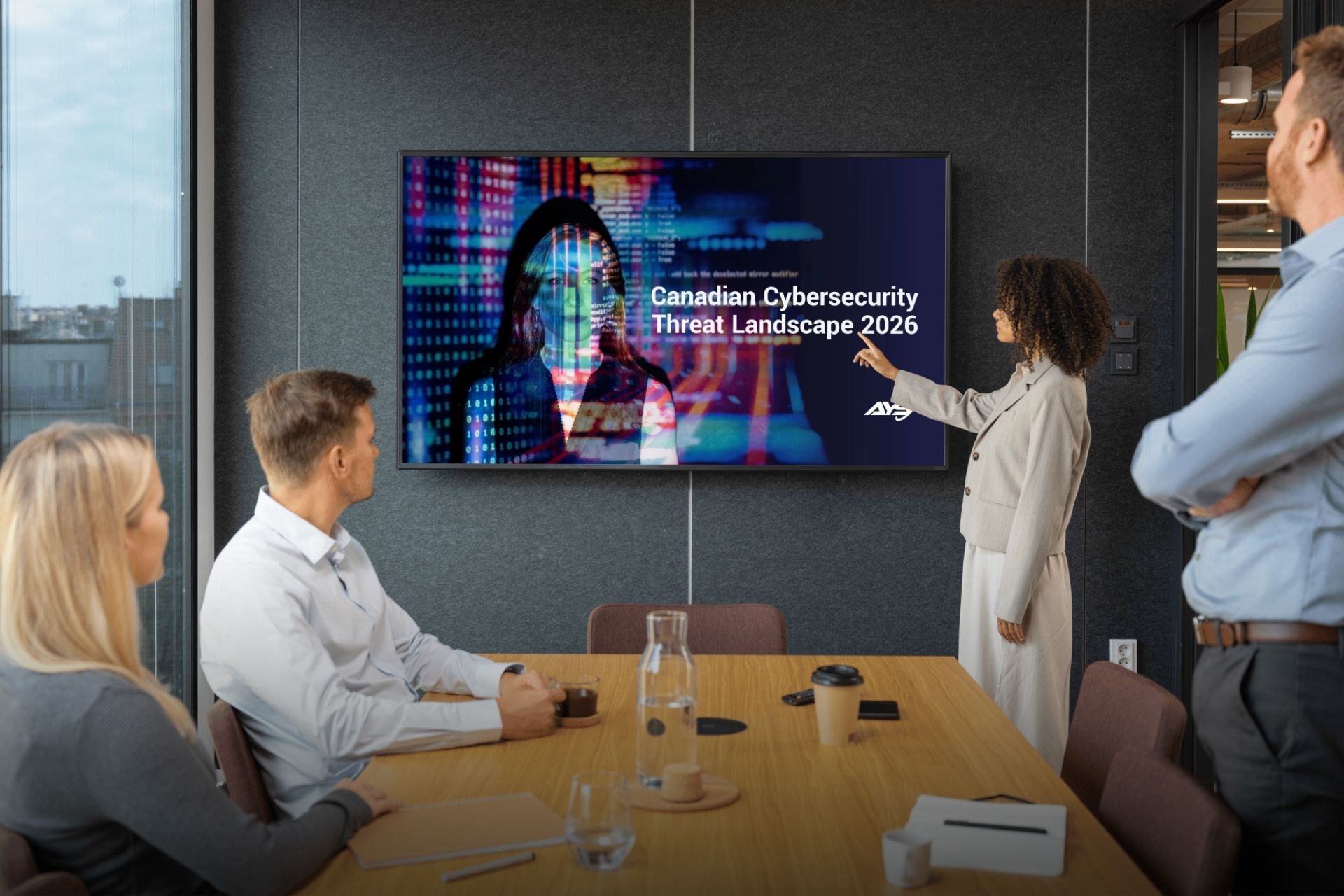
Canadian Cybersecurity Threat Landscape 2026 | Part 1 of 10
Ransomware in 2026
If you run a small or mid-sized business, there’s a good chance you’ve heard of ransomware. Maybe you’ve seen it in the news, or maybe a fellow business owner has mentioned a close call. But here’s the uncomfortable truth: most SMB owners I talk to still think ransomware is something that happens to big corporations, hospitals, or government agencies, not to a 10-person accounting firm in Mississauga or a dental office in Brampton.
That assumption is exactly what attackers are counting on.
This post is the first in a 10-part series based on our Canadian Cybersecurity Threat Landscape 2026 report. Over the coming weeks, we’ll break down the top 10 cyber threats facing small businesses in Canada this year, and more importantly, what you can actually do about them.
Let’s start with the one that keeps IT professionals up at night: ransomware.
What Is Ransomware, Exactly?
Ransomware is a type of malicious software that locks you out of your own data. Once it’s inside your network, it encrypts your files (your client records, financial data, contracts, everything) and the criminals behind it demand payment, usually in cryptocurrency, to give you the key to unlock it.
In the best-case scenario, you’re locked out for a few hours. In the worst case? You’re shut down for weeks, lose critical data, and face regulatory penalties if customer information is exposed.
The Numbers Don’t Lie
Ransomware remains a major cyber threat for Canadian companies. In the 2025–2027 Ransomware Threat Outlook, the Canadian Centre for Cyber Security reports that among businesses experiencing cyber security incidents, about 13% identified ransomware as the method of attack, up compared with earlier surveys — showing the threat is growing, not shrinking.
Meanwhile, national cybersecurity surveys show that roughly 1 in 6 Canadian businesses (16%) were impacted by a cybersecurity incident in recent years.
Even when ransom isn’t paid, the financial burden is significant. Total recovery costs associated with cybersecurity incidents in 2023 doubled to about $1.2 billion in Canada, highlighting how downtime, emergency IT recovery and reputational damage often far outweigh the ransom demand itself.
Other surveys of small and medium-sized enterprises indicate that many Canadian SMBs remain underprepared for cyber threats, with fewer than half reporting confidence in their ability to withstand a breach.
All of this underscores one reality: ransomware isn’t only a risk for large organisations.
Canadian businesses of all sizes are targets, and the consequences can be costly beyond the headline ransom figures.

REDUCE YOUR RANSOMWARE RISK
Ransomware exploits gaps fast. The right protection closes them before damage is done.See how our managed IT and cybersecurity services help Canadian small businesses stay secure and resilient.
Learn MoreIt Happened Right Here in the GTA
Recently, a small, six-person financial services firm in North York was hit by a ransomware attack that brought its operations to a standstill. The attackers stole roughly 5 GB of company and customer data and froze their servers, forcing the entire business to shut down for weeks.
The owner later admitted:
"We thought we were a small company and would not get hit."
That’s a sentiment I hear all the time from business owners across Mississauga, Oakville, Brampton, and the surrounding areas.
Unfortunately, size doesn’t make you invisible. It makes you an easier target. Smaller businesses typically have fewer security resources, which is exactly what cybercriminals are banking on.
Why It’s Getting Worse in 2026
Ransomware isn’t just growing. It’s evolving. Attackers are now using artificial intelligence to make their malware smarter, adapting on the fly to evade detection and even choosing ransom amounts based on what they think a business can pay. Ransomware-as-a-Service (RaaS) kits are available on the dark web, meaning even low-skill hackers can launch sophisticated attacks with a few clicks.
The Canadian Centre for Cyber Security has been clear: ransomware is still the primary threat to business continuity in this country. A single successful attack can cause massive downtime, data loss, reputational harm, and costly regulatory penalties if customer data is exposed.
What You Can Do About It Today
The good news is that you don’t need a massive IT budget to protect yourself.
Here are six practical steps every small business should be taking right now:
• Back up your data regularly, and keep backups offline. If ransomware hits, a clean, recent backup means you can restore your files without paying a cent. But those backups need to be stored offline or offsite, and tested periodically to make sure they actually work.
• Keep your software updated. Many ransomware attacks exploit known vulnerabilities in unpatched software. Enable automatic updates where possible, and make patching a regular part of your IT routine.
• Use strong endpoint protection. Modern security software goes beyond basic antivirus. It can detect suspicious behaviour (like the rapid encryption of files) and stop ransomware before it spreads.
• Train your team on phishing. Phishing emails are the number one way ransomware gets delivered. Your employees are your first line of defence. Help them recognize suspicious senders, urgent demands, and dodgy attachments.
• Lock down access with strong passwords and MFA. Multi-factor authentication on every account makes it dramatically harder for attackers to get in. And if you use Remote Desktop (RDP), secure it immediately. Weak RDP passwords are a favourite entry point for ransomware gangs.
• Have an incident response plan. Know who you’ll call if the worst happens: your IT partner, your cyber insurer, law enforcement. Having a plan in place means faster recovery and less panic when every minute counts.
Final Thought
Don’t Wait Until It Happens To You
Ransomware is not a matter of if but when for most businesses. The question is whether you’ll be prepared when it comes. At AYS Technologies, we help small businesses across Mississauga, Oakville, Brampton, Milton, Georgetown, Guelph, and the surrounding GTA build the kind of IT security that stops ransomware in its tracks, or at least minimizes the damage if an attack slips through.
If you’re not sure where your business stands, we offer a free security assessment to identify your biggest vulnerabilities and help you build a plan. Reach out to us at info@ayscanada.com or call 1-866-410-6867.
WANT THE FULL PICTURE?
This is just Part 1. Get the complete breakdown of the top 10 cyber threats facing Canadian SMBs in 2026 and the practical steps to address them.
Access the Full ReportComing up next: Part 2 – Phishing: Don't Take the Bait.
We’ll look at how phishing scams are getting smarter (thanks to AI), a real case where a GTA municipality lost over $500,000 to a phishing email, and what you can do to keep your team from falling for it.